
God’s Breath in Our Lungs: Adding Pranayama to Daily Life
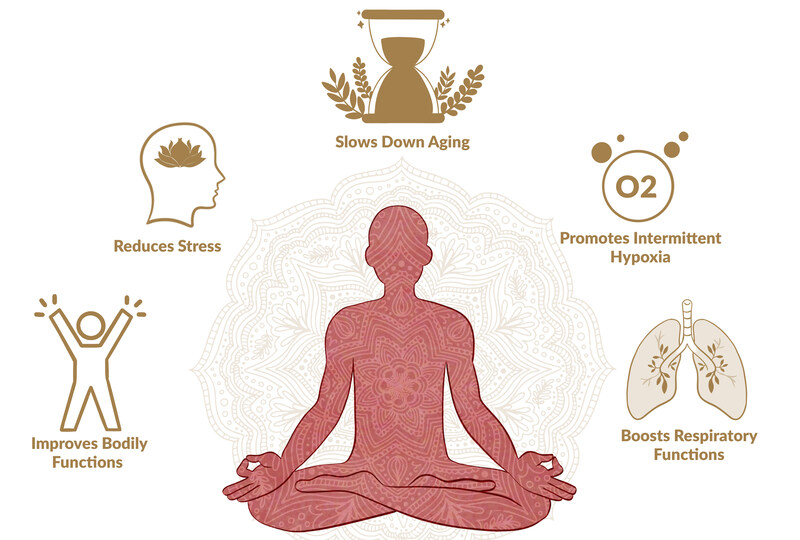
Pranayama is often described as the practice of intentional breathing. Prana means “breath,” and yama means “restraint.” Together, this practice points to a mindful relationship with the breath God has given. When intention is brought to each inhale and exhale, the body and spirit are invited into more connection with the mind. In this slowing down, the nervous system is allowed to settle, the rest becomes deeper, and emotions begin to balance.
There, God can meet you. There, you can hear His voice. There, you can hear His voice.
‘I will put flesh & muscles on you and cover you with skin. I will put breath into you, and you will come to life. Then you will know that I am the Lord.’ (Ezekiel 37:6 NLT)
But beyond the physical benefits of Pranayama, it is a good reminder of how God has divinely created our beings and how to more intentionally give our bodies what they need: breath that is life-giving and intentional.
For the Spirit of God has made me, and the breath of the Almighty gives me life (Job 33:4 NLT).
Job reminds us that life happens at first breatha. From there, humans are designed to rely on breath as a means of connection—with the body, with the present moment, and with God Himself. Through practices such as Nadi Shodhana, the breath becomes a quiet prayer, calling the mind to stillness and the heart to awareness while remaining gently anchored in the body.
Pranayama in a Busy World
Many practices of Pranayama are useful for nervous system regulation, clearing the Monkey Mind and for preparation for prayer and yoga. Even in a full schedule without any equipment, pranayama is a limb of the yoga practice that can be easily integrated into the busyness of everyday life.
A breathing technique like Nadi Shodhana – alternate nostril breathing – can be practiced anywhere without prompts. It simply requires a pause. Even sitting in the car in a parking lot before a busy meeting, school pick up, or another public interaction will help return the practitioner to their body and bring a calm to their mental state.
Nadi Shodhana – Alternate Nostril Breathing
- Start by closing down the eyes and registering the physical shape – what is touching the body? How is the body supported? Hands can rest on the thighs or at the belly.
- Notice the breath and whether or not it can be slowed down. If the heart is beating quickly, notice how the slower exhale helps signal safety and unhurriedness.
- Place your pointer and middle finger of your right hand in the space between your eyes.
- The right thumb will hover over the right nostril, and the right ring finger will hover over the left nostril.
- The mouth remains closed for the practice.
- Press the thumb down on the right nostril, breathe out gently through the left nostril. Start with the count of 4.
- Pinch all fingers down, closing both nostrils to the count of 4.
- Next, breathe in from the left nostril and then press the left nostril gently with the ring finger and little finger. Removing the right thumb from the right nostril, breathe out from the right.
- Repeat pinching all fingers down to close off the airway before transitioning.
- Breathe in from the right nostril and exhale from the left.
One round of Nadi Shodhana Pranayama is complete. Continue inhaling and exhaling from alternate nostrils for 7-8 rounds in total.
When finished, reverse the channels of air – inhaling in the nostril previously exhaled, and exhaling through the nostril previously inhaled. Keep the eyes closed throughout and continue taking long, deep, smooth breaths without any force or effort.
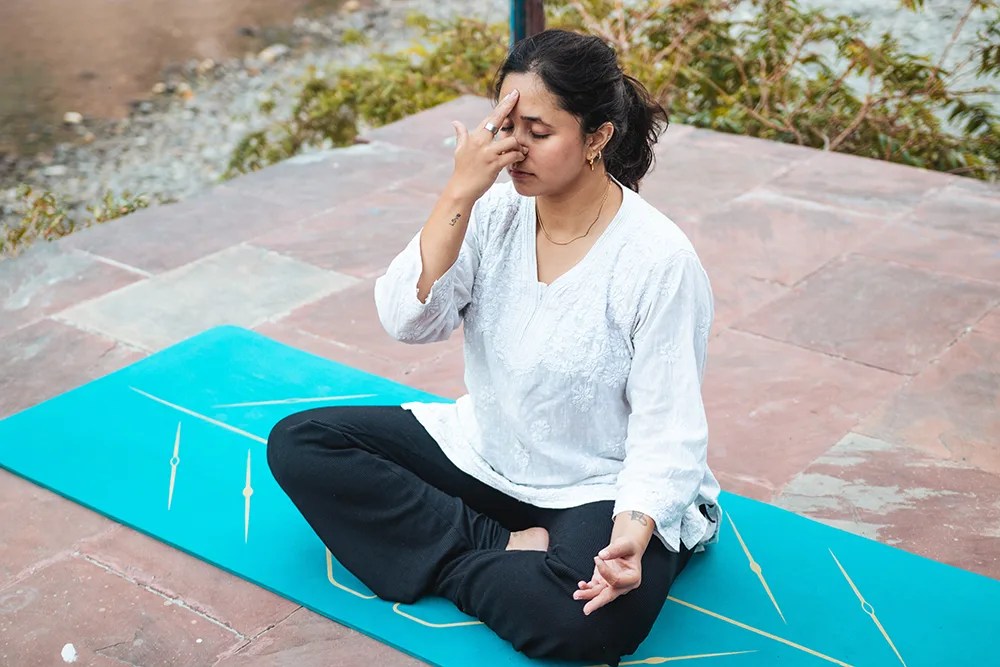
Notice the cool air coming into the nostril and the warm air leaving it. Register in your body how it feels to actively and intentionally send air in one channel and exhale it in another. Allowing the channels to open up from one side of the face, nasal passage and brain calms the active mind, balances dysregulated emotions and sends calm and intention to the nervous system.
The sound of yoga practice can resemble chanting, mantra, the universal Ohm, or music playing during Asana practice. In contrast, Pranayama develops the opposite: the practice of listening and focus. While some variations of Pranayama introduce Ujjayi (ocean sound) breath, Alternate-Nostril Breathing focuses on listening to the breath sounds as air is inhaled and then exhaled. If the world feels overwhelming and chaotic, with the daily sounds of life, family, and modern society, Nadi Shodhana is a beautiful counter-action to develop detachment from noise to bring the breath, mind, and body into alignment. As the practice becomes more automatic, the world will seem less obtrusive in daily life.
The gift of Pranayama is its simplicity. It is always accessible and available, requiring no equipment. Whether practiced on the mat or cultivated in daily life, intentional breathing offers a way to return to the body, remain grounded in the present moment, and remember the God who gives breath and sustains life.

 Recklessly Hopeful
Leave a comment